






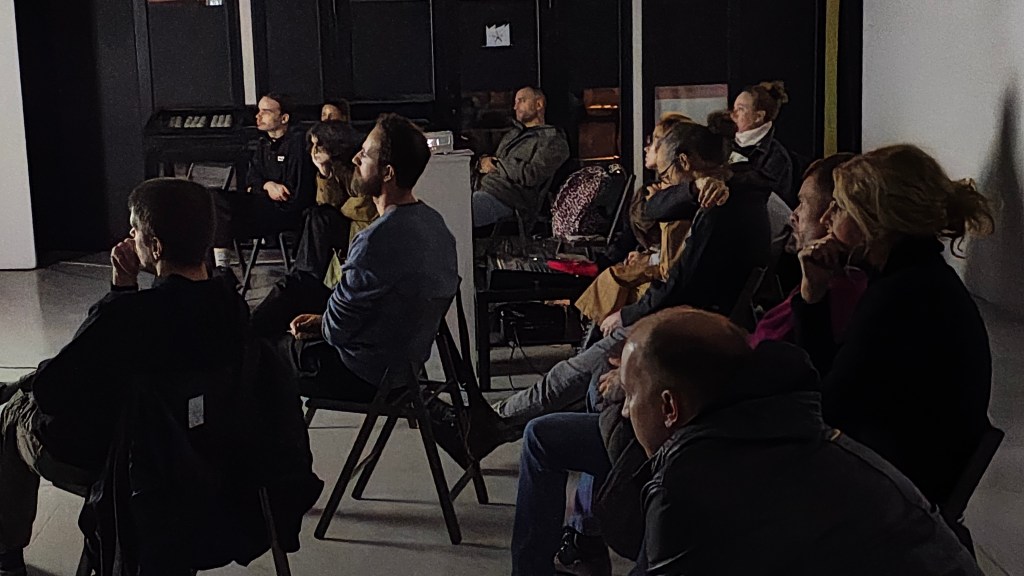
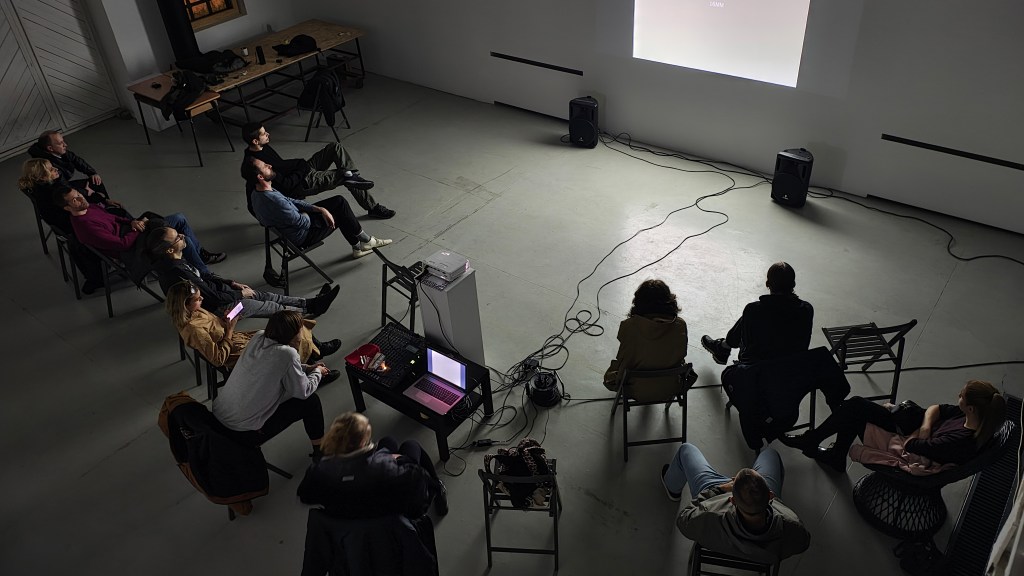
Experimental Superstars #10 Winners
Best Experimental Film
Dear, When I Met You, dir. Craig Smith, 6 min, USA, 2023.
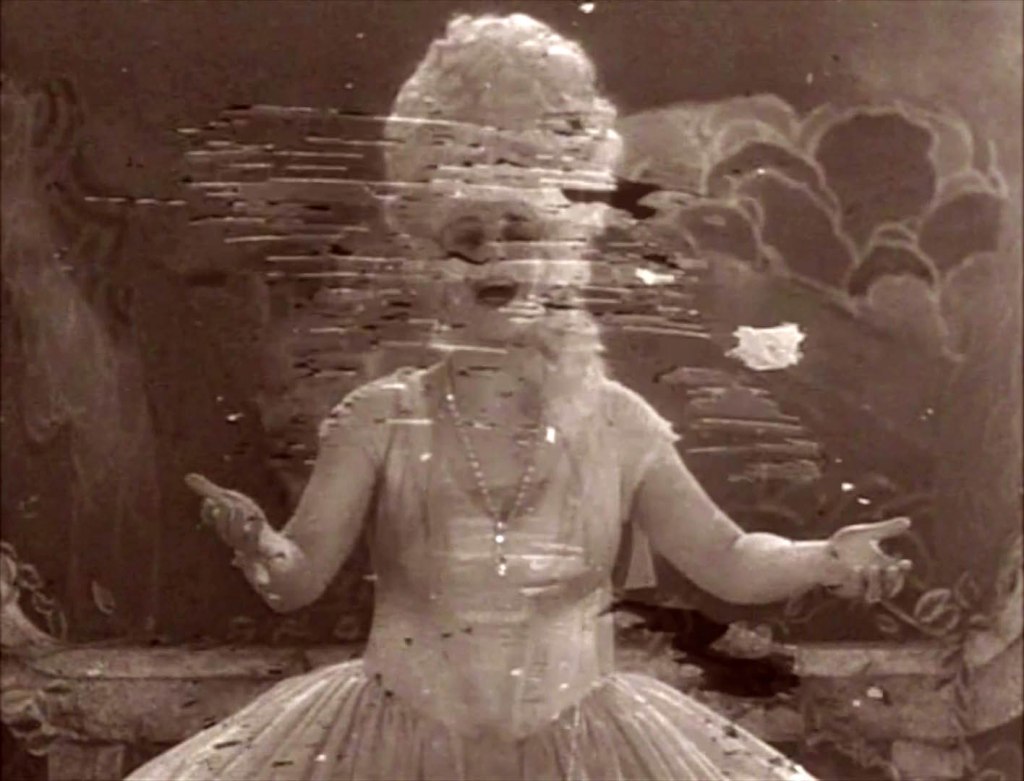
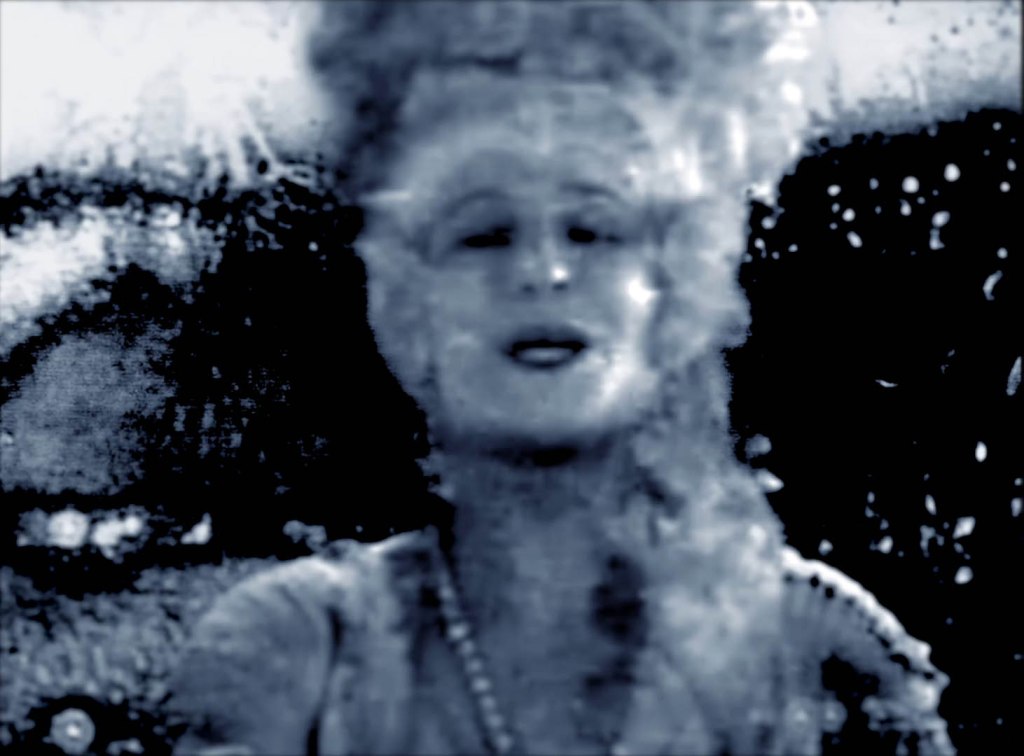
Dear, When I Met You is a meditation on how art can be both ephemeral and immortal at the same time.
Visually, the film begins with a badly deteriorating 1928 musical short and reworks it into something new by celebrating the beauty of the original film’s aging.
Sonically, I have added six additional recordings of this mostly forgotten song. They run simultaneously with the original, creating a new performance which both echoes and advances the image.
Dear, When I Met You also addresses the impact motion pictures had on stage performers of the 1920s. Performer Yvette Rugel knew that filmed performances would affect her stage career, but she also realized that motion pictures were becoming a financial necessity.
I have been recording, editing, & mixing sound since childhood, and teaching sound design and technology at California Institute of the Arts since 1986. In my spare time, I experiment with implied narrative and accidental sound design — putting together sounds & images that have nothing to do with each other to create unexpected stories.
Craig Smith has been recording and manipulating sound since childhood. After graduating from USC’s School of Cinematic Arts, he worked as a sound editor and production mixer in Hollywood, specializing in noisy action-adventure films that are blamed for the downfall of society. He left that world in 1986 to supervise the Film/Video Sound Department at CalArts where he teaches sound design and technology. Craig is a Life Member of the Society of Motion Picture and Television Engineers, and the Audio Engineering Society.
Jury Special Mentions for the Experimental Film
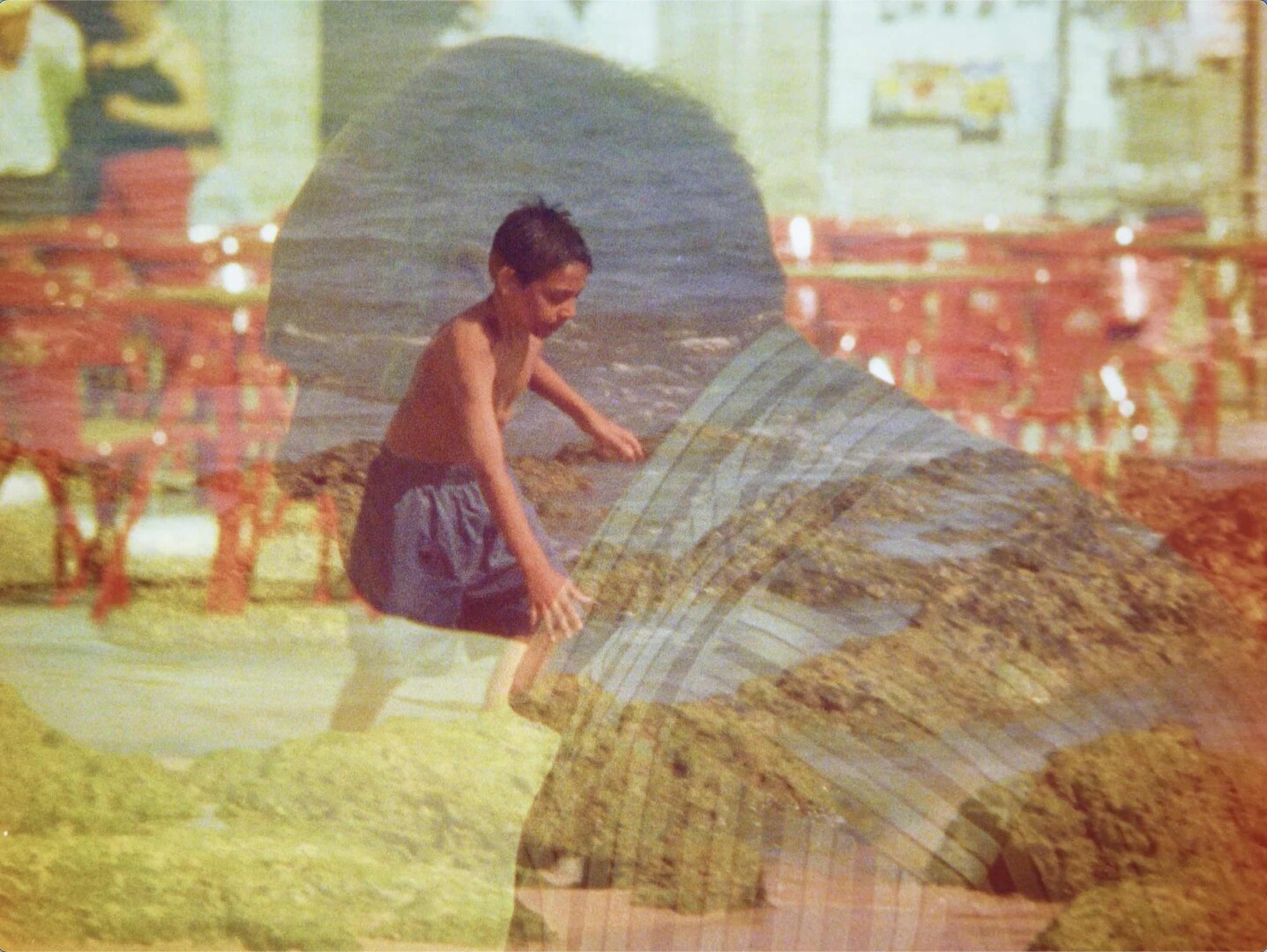
That Bolex Thing, dir. Paul Echeverria, 4 min, USA, 2024.
The Bolex is a Swiss-made film camera that played a pivotal role in the development of independent and avant-garde filmmaking. Introduced in the 1920’s, the camera’s lightweight and portable design made it an accessible choice for filmmakers who wanted to break away from the constraints of large studio productions. The affordable price point democratized the filmmaking process, enabling filmmakers to explore new creative avenues and push the boundaries of the art of cinema.
The aesthetic look produced by the Bolex is equally unique and significant. The 16mm images display a textured and grainy image quality. The resulting visuals are synonymous with the visionary and poetic aesthetic of artist inspired filmmaking.
In addition to its iconic status, the Bolex contains a recurring and noticeable quirk. In order to initiate or conclude the filming process, the hand-cranked camera relies on a complex harmony of mechanical design. As the gears get up to speed, the internal mechanism ramps and fluctuates. This technical operation produces a distinctive oscillation that is noticeably imprinted on the film plane. For the span of several seconds, the film captures an ethereal canvas of color and light. Through this process, the Bolex successfully envisions the random crystallization that is inherent within the motion image.
That Bolex Thing highlights this fleeting occurrence of visual abstraction. The source footage is composed of brief instances containing the filmic “thing”. Within this tapestry, the subject matter offers a contrast between current and earlier devices of image capture. There is little doubt that modern camera technology provides unprecedented levels of efficiency and convenience. However, amidst the dependence on new technology, the Bolex maintains a timeless allure and magnetism. This glorious machine provides a genuine reminder that technological progress is underscored by nostalgic obsolescence. Ultimately, That Bolex Thing contextualizes the ongoing interplay between innovation and tradition.
Paul Echeverria is a filmmaker, digital artist and educator. His research and creative practice examine the formative dynamics between childhood, parenthood and the family structure. In addition, he produces work that contemplates the inevitable collision between humans and technology. Echeverria works with multiple forms of media, including film, video, performance, augmented/virtual reality, social media, data manipulation, podcasting and e-literature.
Echeverria is an Assistant Professor of Digital and Emerging Media Production at Wayne State University in Detroit, Michigan. His films and digital works have been exhibited at multiple venues, including the Museum of Modern Art (MoMA), Mimesis Documentary Festival, Media City Film Festival, Other Cinema, the FRACTO Experimental Film Encounter, VASTLAB Experimental Festival, the Dallas Medianale, Festival Ecrã, the Festival Internacional de Videoarte de Camagüey, Experiments in Cinema, the NY Media Center by IFP, The Wrong Biennale, the Bronx Museum of the Arts, Anthology Film Archives, and the Angelika Film Center. An ongoing archive of works can be viewed at http://www.paulanthonyamator.com
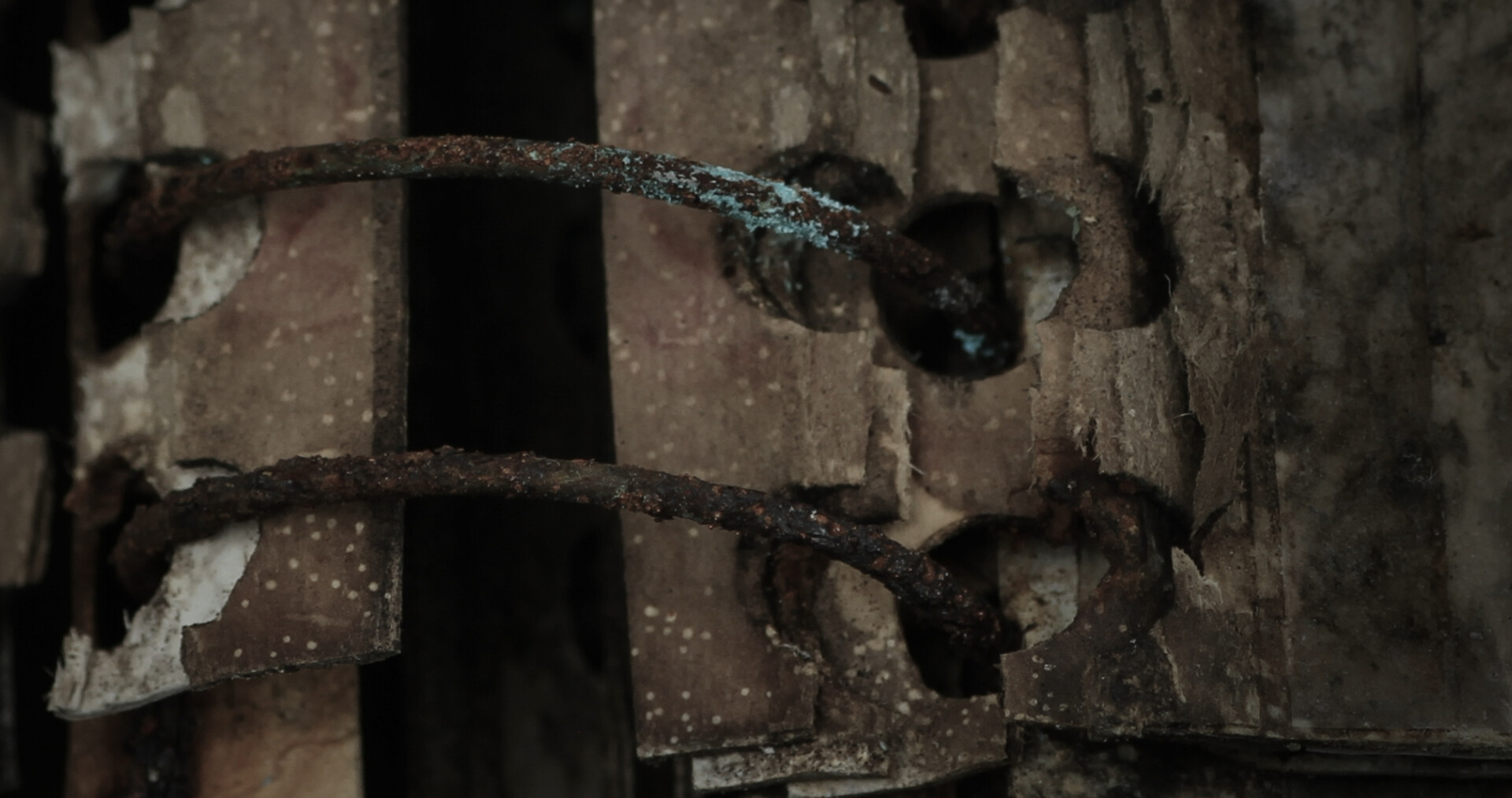
Entropic Memory, dir. Nicolas Brault, 6 min, Canada, 2024.
This photographic exploration of family photo albums ravaged by water evokes hazy and indistinct memories, poignant witnesses of a fragile past.
Nicolas Brault is a multi-award winning filmmaker and Professor teaching the art of animation at Université Laval. In 2000, he won the National Film Board of Canada’s Cinéaste recherché(e) competition. His film Antagonia (2002) won an award at the Cinanima International Animated Film Festival, and The Circus(2011) was nominated for Best Animated Film at the 37th César Awards. In 2012, he developed a series of short non-narrative films and immersive projections around the human body. Of this series, Foreign Bodies (2013) won the Off-Limits Award at the Annecy International Animated Film Festival, and Squame (2015) received several international awards. The series’ newest entry is Entropic Memory (2024).
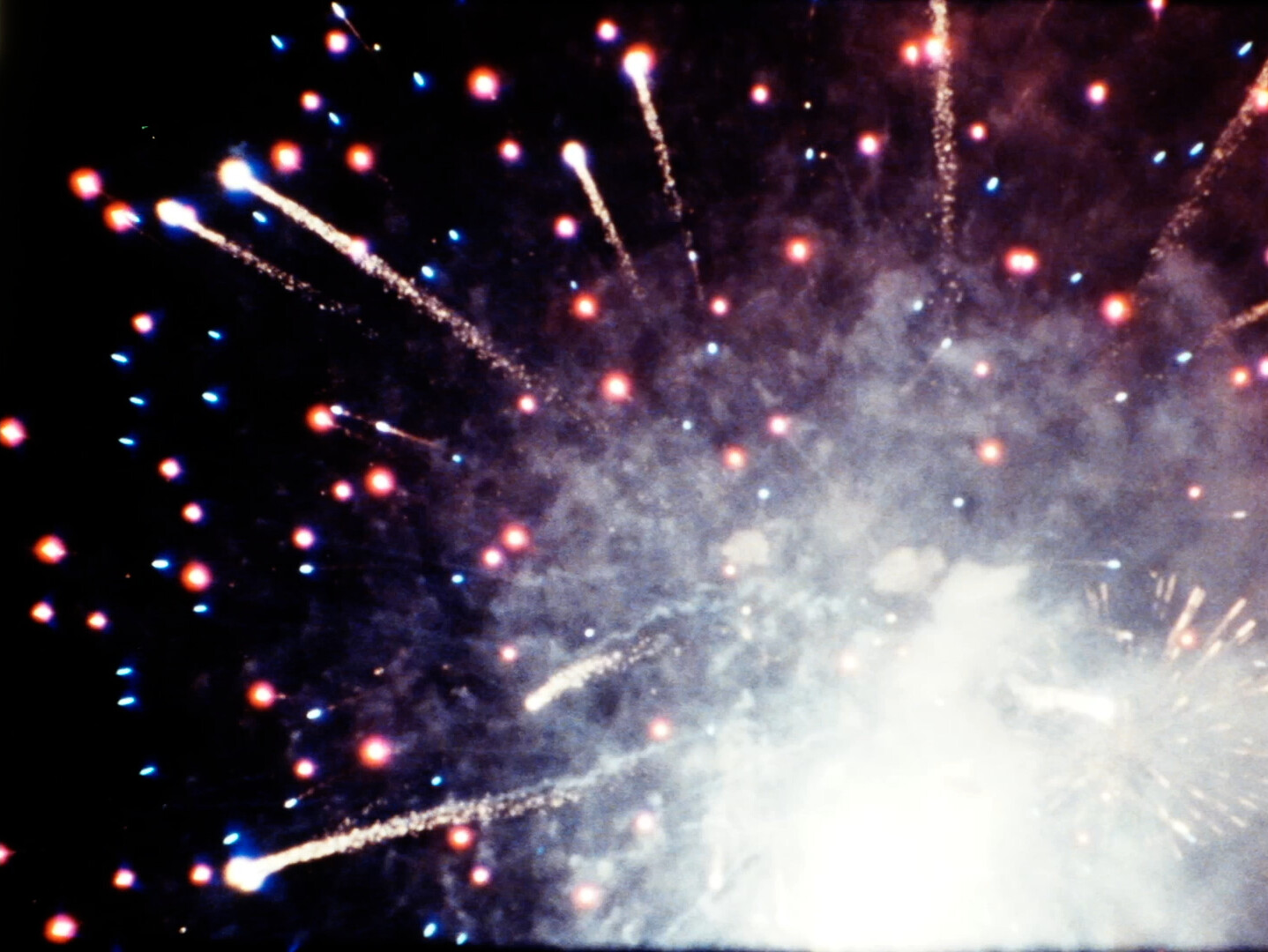
Light, Noise, Smoke, and Light, Noise, Smoke, dir. Tomonari Nishikawa, 6 min, Japan, 2023.
Fireworks were shot at a summer festival in Japan with a Super 16 format camera in order to obtain images on the optical soundtrack area on the filmstrip. The position of the photocell to read the visual information on the optical soundtrack area in a 16mm film projector is 26 frames in advance of the position of the gate to project the image. Each footage from 2 rolls of 16mm film were cut into shots of 26 frames each, and the shots were alternated from one roll to another, which would further separate the sound and visual, while producing a distinct rhythm throughout the film.
Best Experimental Documentary:

Easter, dir. Ksenia Yurkova, 15 min, Austria, 2023.
At the intersection of found archival and personal material, this work analyses the discursive eclecticism and political eschatology of contemporary Russia that has been used as the new ideological justification for the military invasion of Ukraine in February 2022 in a so-called “denazification” operation – a mirror projection of the country’s internal process of leaning towards fascism.
The work studies the prerequisites of a new doctrine of war in modern Russia. Formally, it is built on a speculative polyphony of voices belonging to the older generation of the author’s family. The divisions within this micro-community were defined through origin, geography, class, “low” culture, and the ubiquitous expansion of “high” culture. These elements might have continued to coexist had they not been held hostage by aggressive propaganda, which emasculated all differences and reduced them to a single aesthetic conception of hubris.
The symbolic point of connection for the author is her grandmother of Jewish-Greek-Ukrainian origin, a native of Mariupol, which was destroyed by Russian troops in 2022, who escaped the Nazis during their occupation in 1941–1943.
The paradoxes of language and symbolisms of hostility are displayed in the contrasting archival and video sequences created by the author, where the counterpoint is the pathos of ideologies that foreshadow tragedy and grotesque faith bordering on schizophrenia.
Ksenia Yurkova (1984) is an artist, curator, and researcher, living in Austria. She considers her leading artistic media to be text, photography, video, and installation. Yurkova started her practice as a researcher in the field of political theory and communication theory. The main focus of her interest for a long time was communication and language: the varieties of its substance, the possibility of conversion, its mythological aspect, stereotyping (the question of personal and political self-identification and identification by others), problems of memory, attitudes, and reliance. Lately, the artist has been researching the phenomenon of affect in its autonomous bodily emanation; in its personal and political registers. She focuses on how a stage of individual perception, to which one can relate memory, traumatic recollection, and problems of identity construction, transforms itself into affects of the political body. Coming a long way from political and cultural journalism, Ksenia settled into individual artistic and research practice through organising and curating cultural and art events, which allows the vital critical distance for observation and work with contemporary issues. Her approach is based on methods of language appropriation, over-affirmation, self-reflection, and self-criticism through ironic components inevitably added to the most pressing matters. As an artistic director, Yurkova worked in St. Petersburg-based exhibition centre Tkachi until it was closed due to political censorship. Nonetheless, Ksenia didn’t give up socially engaged practice and launched a festival-laboratory Suoja/ Shelter in Finland and an artist-in-residence research program InSILo in Austria with Emergency slots for the artist under political pressure.
Ksenia Yurkova has taken part in numerous shows and festivals worldwide, to mention Photoireland Festival21; Backlight Festival ’20; Athens Photo Festival ’19, ’17, ’15; Krakow Photo Month ’19; Grandprix Fotofestival ’15; screening at Documenta@15; three times has been nominated to Kuryohin Prize, was awarded stipends from the Austrian Ministry of Culture and Sport, and by the Federal State of Lower Austria; has released several artist books. Her works are in public and private collections worldwide, mainly in Russia, Germany, France, Finland, and Austria.
Jury Special Mention for the Experimental Documentary

I Found Water, dir. SJ Ramir, 9 min, New Zeland, 2023.
I Found Water is an autobiographical film that employs textured images drowned in darkness to provoke reflections on the nature of memories and the mysterious logic of their preservation.
SJ. Ramir is a New Zealand filmmaker residing in Melbourne, Australia. His films often contain lone figures moving across remote and isolated landscapes and are concerned with existence and its relationship to, and occupation of, geographical space. The landscapes and structures in his films are often a mix of real and/or constructed 3D models.
The prominent style of his films came from early years of experimentation with custom-made lens filters. These filters enhanced video pixels and produced hazy, distorted images, which Ramir felt were visually suggestive of emotional states connected with a central theme in his work: isolation.
His films have been exhibited at art galleries worldwide and screened at many prestigious film festivals including: the 67th Venice International Film Festival, International Film Festival Rotterdam, Melbourne International Film Festival, Jih.lava, IDFF and the Oberhausen International Short Film Festival.
Best Music Video
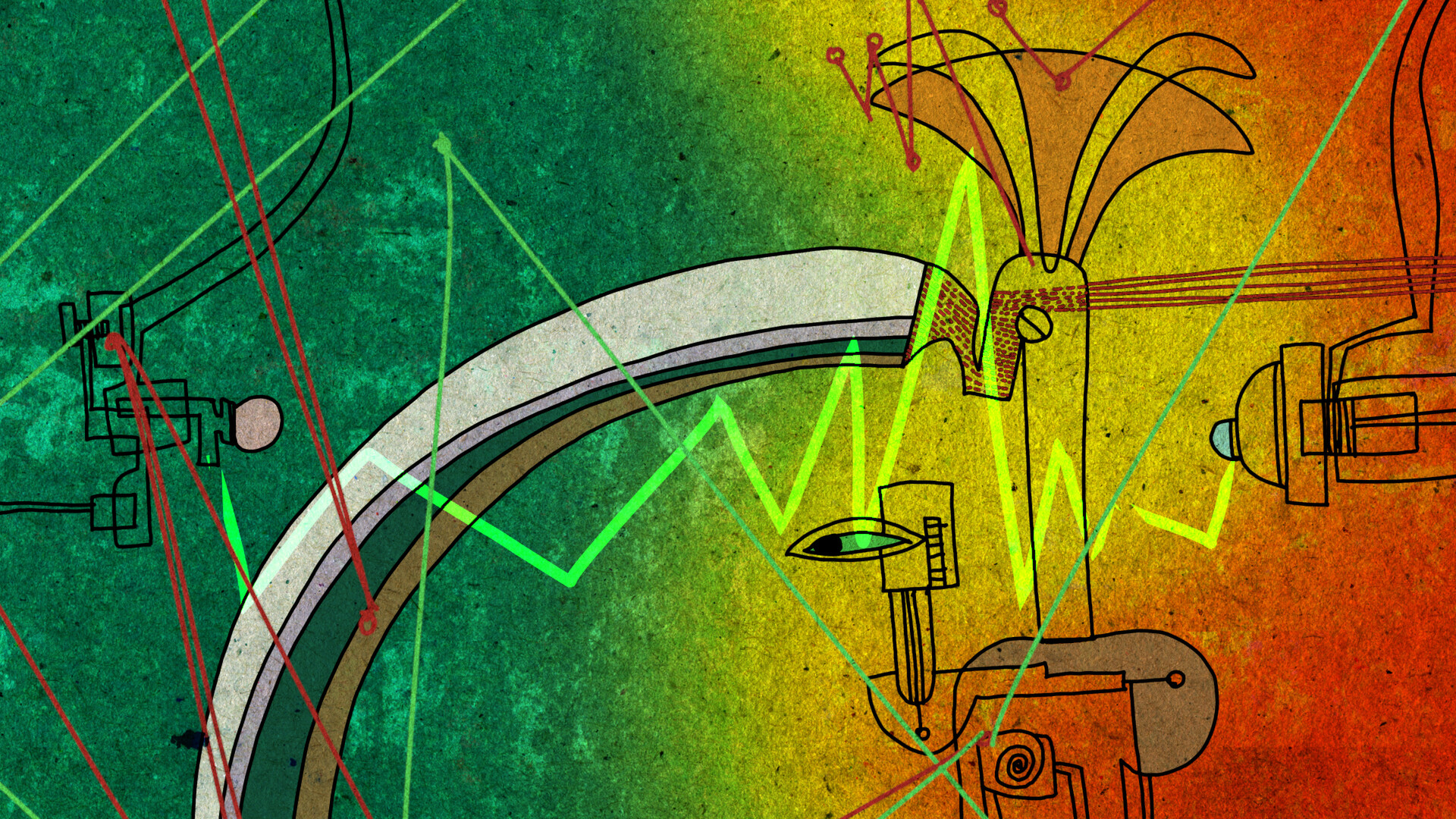
In Threes, dir. Natalia Ryss, 7 min, UK, 2023.
The image-idea of the Tree as an embodiment of the Three Principles unites the manifestations of forms, following the rhythm of the heart.
Natalia Ryss, creator of animated and experimental shorts.
Works as an independent filmmaker and in collaboration with different producers.
Prefers non-conventional structure of narration, uses expressive editing and mixing of art-techniques. Participant of numerous festivals.
Was born in Rostov-on-Don. Graduated from Art College in Rostov-on-Don (designer) in 1988 and art graphic faculty of the Russian State University of Cinematography (VGIK) in 1995. Since 2015 she lives in Haifa, Israel.
Jury Special Mention for the Music Video

Uncharted Destiny, dir. Raymond Levier, 11 min, USA, 2023.
After a near-fatal test flight crash, a retired Air Force commander experiences a biochemical fusion with an alien spacecraft, leading to a cosmic journey that reveals his true identity and connects him with an alien civilization at the edge of the universe.
Ray Levier is a drummer, composer, producer, motivational speaker, singer songwriter, and this is his narrative debut as a writer and director.
He is a veritable Swiss Army Knife on the kit, facile at finessing jazz-fusion grooves, swinging a jazz combo, laying down rugged hip-hop beats and nasty funk, accompanying singer-songwriters with subtle grace, and bashing away at rock beats with panache and precision.
As a career musician, Ray is in an in-demand sideman who also divides his time with teaching, clinics, and speaking dates; and composing for film and TV. When he’s not hard at work in one or more of these outlets, Ray can be found woodshedding his chops, or composing for his solo career.

 Mafin proizvodnja audio-vizuelnih proizvoda